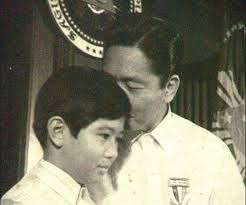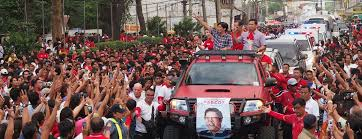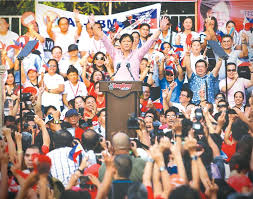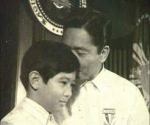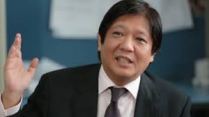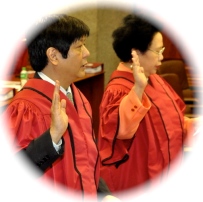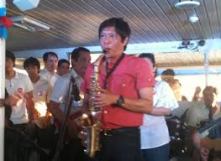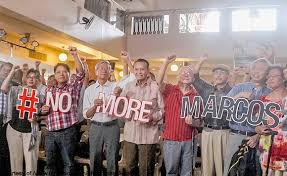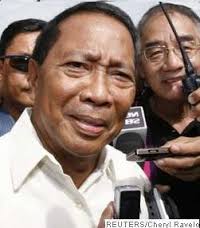
It is beyond comprehension how some people try to hold Congressman Ferdinand Marcos II (Bongbong) “responsible” for his father’s declaration of Martial Law almost 40 years ago especially now that he is running for Senator. Bongbong was barely fifteen years old when Martial Law was declared in 1972 not to mention he was in England attending to his schooling, perhaps, worrying about tickets for the Rolling Stones concert as most youngsters his age were concerned with or the likes of it. As for the entire period of the controversial Marcos Rule, it would be best to leave to historians the rendering of a dispassionate accounting of that period in the history of our nation when President Marcos was at the helm of government. Bongbong Marcos, in fairness, has declared that he is ready to be judged by the voters not based on anyone’s actions nor even on his father’s achievements, but based on his own performance the last 15 years he has been in public office – nine years as Governor of Ilocos Norte and six years as Representative of the 2nd district of the same province. Bongbong’s sterling performance during his years in public service, and the remarkable transformation of the province of Ilocos Norte under his leadership, speak for themselves; and should the voters decide based on his track-record, then he will surely be voted to the Senate in the coming elections, half a century after the late President Ferdinand Marcos was first elected to the same post. And as the sun rises, so also will the son.
Bongbong marcos to the senate?
Lack of a clear message
The Aquino camp blames “lack of a clear message” in their infomercials that has caused Villar to catch up in the surveys. True, or partially true. People have yet to hear a single argument in favor of Noynoy that does not mention his mother or father. They lament the fact that while his opponents present to the electorate their respective track records, accomplishments, and vision, praises given to Noynoy by his supporters have little to do with him but are, rather, traits attributed to his parents. That worked for him during the wake and burial of the late President Aquino when strong emotions ruled. But as the intensity and strength of the sympathy for the Aquino clan began to wane, so did the support for Noynoy. His bid for the highest office of the land was rooted mainly on the death of Cory and now, his handlers are scrambling to find him a secondary launching pad. But since Senator Aquino was never even considered by his party mates to be their Vice Presidential candidate let alone their standard bearer (not until the death of Cory), where will they now anchor his run for the Presidency? Track record? Capability? Experience? Those qualities are what the Liberal Party originally said Mar had among all their party-mates and, perhaps, rightly so. It must be remembered that at no time before the large crowds came out to mourn Cory’s death was Noynoy in the radar screen of the political leadership of the Liberal Party. They simply did not see him as someone prepared to be the next President. It will now be interesting to see how his handlers spin a new “story-line,” and craft a new “offensive” for him that would sustain (and this is the operative word — sustain) the viability of his campaign all the way to election day. Abangan.
As far as logistics issues are concerned regarding the automated elections, we won’t really know that until much later and as we go along; and regarding some aspects of it, like on-time delivery of machines in each polling place (three days before elections), transport of satellite equipment to precincts where cellular signal becomes jammed or unusable, and deployment of replacement machines in cases of machine bog-down, we won’t know that for sure until it happens, or does not happen, come election day. What we have to ensure before the elections is that all these contingencies are at place and ready to be utilized when and where the need for them might arise.
The month of February will be a “telling” month for the success of a fully automated election in May 2010. There are deadlines for two essential tasks: the printing of ballots (delayed for a second time); and, the delivery of all the machines, both due this month — the 7th and 21st respectively. Simultaneous to these will be more tests of more machines in various areas of the country.
On the technical side, the transmission aspect is still worrisome in cases where signal is weak and the need for satellite transmission arises. There is still also the issue of the source code and whether there’s enough time to have it reviewed by third party experts from abroad. And thirdly, the need for personal verification given by the machine of the correct reading of each one’s ballot – a kind of receipt after one inserts one’s ballot into the PCOS machine showing that what one wrote in the ballot is the same as what the machine read.
As for logistical issues, we won’t really know that until much later and as we go along; and regarding some aspects of it, like on-time delivery of machines in each polling place (three days before elections), and deployment of replacement machines in cases of machine bog down, we won’t know that for sure until it happens, or does not happen, come election day.
And then there’s the switching from automated to manual in areas of failure of the automated system. Questions regarding the correct reading of “voters intent” which in the case of the PCOS machines, the calibration of the scanner is to be set to at least 50% “shaded” of the circle beside the candidates name for it to be counted which, in the case of a manual count, will have to be read by the human eye. Can the eye tell the difference between 49% shaded and 51% shaded? There is also the question of the effect of a few precincts in manual mode mixed with automated transmission from other precincts on the canvassing by the servers in the municipal and provincial level.
The training of teachers and “IT experts” in the mechanics of automated voting has also been postponed while the information dissemination to the public has finally began. There’s still enough time to do all these and the Nike slogan is what is most appropriate here: “Just do it!”
Many other questions remain to be satisfactorily answered before we can claim that, yes, the voters will be going to the polls confident that they are participating in elections that will be fair and credible – the main reason for switching to full automation to begin with. There are still a lot of loose ends that need to be tied. In fairness to Smartmatic, they have not been remiss yet on any “deliverables” in their contractual obligations.
On the one hand, we still have enough time to get answers on all the issues raised, and get this right; but on the other hand, elections is fast approaching. For now, two things are required of us: patience and continued vigilance.
Nuisance Sister of a Candidate
First it was Kris Aquino’s marital problems made public due to her confrontation with her husband’s supposed “admirer” that caught the media’s attention. This was followed by the leak of the Senate’s Ethics committee report on the “C-5 re-routing, insertion, over-pricing” controversy censuring Villar for unethical behavior. Then there was the filing of a strong protest with the Comelec by the Liberal Party on the inclusion of KBL Acosta as a legitimate candidate for President. (The inclusion of Acosta dislodges Aquino’s name from top of the ballot’s list of Prsidential candidates to choose from printed in alphabetical order.) Soon after came the junking of the petition to disqualify Erap as promulgated by the Comelec’s Second Division; and more recently, the Live coverage of the Senate hearing on a couple of propositions regarding the ethics issue against Villar that turned into a shouting match between the anti and pro Villar factions and a walk out by Senator Santiago after she castigated the entire senate, Senator Enrile in particular. Enrile in turn accused Villar of attempting to bribe him in connection with the same Ethics report with Villar vehemently denying this. All of these developments occurred in a span of only a week. When the official campaign period begins, the candidates will be allowed to use the V word (vote) and their commercials, no longer “infomercials,” will inevitably be more pointed and direct. With more than three and a half months to go before the May elections, the old dictum, “in politics a week is a long time,” rings truer as the campaign begins to heat up. Unless there’s been a miraculous change in the behavior of most politicians, expect to witness nasty mudslinging coming from the various political camps making candidates vulnerable to drastic changes in the way they are perceived and, consequently, steep fluctuations in subsequent surveys to come. If a week is, indeed, a long time in politics, three and a half months can seem like a lifetime; and in this country, especially, anything can happen…short of presidential candidates Acosta and De los Reyes leading the pack in the next survey. Abangan…
It would seem the so-called youth vote is again beginning to gel after it fragmented when Senator Chiz Escudero withdrew from the Presidential race. The reason for this is the youth’s growing attraction to the candidacy of former Secretary Gilbert Teodoro. What’s happening is that every student campus Teodoro visits gains him more and more admirers and committed supporters among the students that are able to see him and listen to him. That should not be surprising because Teodoro is the most articulate among the presidential candidates and has the best grasp of the issues and problems besetting our country today. His physical demeanor, his good looks and that of his wife, of course, also add to the attraction. The youth vote, if it can be harnessed to act in unison as a solid voting bloc, is, by sheer number, bigger and more powerful than any other sector, political party or machinery existing in our political landscape. The youth, comprising close to 60% of the registered voters, may yet be Teodoro’s key to victory, even more so than the much touted Lakas-Kampi CMD machinery which, on the other hand, could provide him the edge in case of a close fight. It would be extreme folly for his opponents to count him out this early in the game.
As part of the preparations for the procession of the Black Nazarene that took place last January 9, 2010, the PNP announced that they had installed a GPS device on the float carrying the statue of the Black Nazarene to know its exact location at any given time. That’s like trying to determine where a full-grown elephant is within a basketball court. This was a procession involving hundreds of thousands of frenzied devotees screaming and jostling to get as close as possible to the float traveling at a snail’s pace speed of about 1 km/hr, and weaving through streets covering a radius of not more than 10 km. The event was covered Live on radio and TV. Ahhh…siguro naman hindi na kailangan ng space-based global navigation satellite system to know its precise location, no? Meanwhile, three procession-related deaths were reported that day. GPS?! Riiight! Nice try, though.
It’s quite clear that Kris Aquino has the propensity, proclivity and insatiable appetite for taking attention away from whoever in her family is in the news – during her mother’s term as President; during her mother’s illness; during the wake and burial of the former President; and now, during the campaign of her brother Noynoy. Based on that pattern, this won’t be the end we will be hearing of her love life and tribulations for the duration of the campaign period; and, if Noynoy wins, expect to be watching more of her “reality show” in the next six years. The problem with that is the narrative is neither unique, remarkable or educational; the story is rather common to, and typical of many couples’ quarrels minus the celebrity status. It has little entertainment value in itself if not for her being the daughter of Cory and Ninoy, a TV celebrity (thanks to being daughter of then Prez Aquino when she debuted in the industry), and now, sister of presidential candidate and survey front-runner, Senator Noynoy Aquino. The real tragedy in this drama is not to be found in her story but in the story within the story: why media gives it the attention that it does.
There are a growing number of people drawn in by the wave of sympathy for the Aquino family upon the death of former President Aquino that morphed into support for Noynoy’s bid for the Presidency, that are now having second thoughts about his candidacy. The newfound doubts and misgivings stem from the fact that to date, five months into the death of Mrs. Aquino, they have yet to hear a single argument in favor of Noynoy that does not mention his mother or father. They lament the fact that while his opponents present to the electorate their respective track records, accomplishments, and vision, praises given to Noynoy by his supporters have little to do with him but are, rather, traits attributed to his parents. It is true that emotions are quicker to react than the intellect to any given situation, so it is the hope of Noynoy’s handlers that the emotions that accompanied the death of the former President will still be the in the minds and hearts of the majority come election day. If by May 10, 2010, Noynoy’s handlers are able to make Cory’s death seem like it had happened “only yesterday” (they will be counting on their ally, ABS-CBN, to do their part), then their campaign strategy would have succeeded. Their work is cut out for them.
According to a friend of ours, it was reported in a tabloid that a certain Jesus Nazareno, who claimed to be the “son” of the Black Nazarene, has asked the Liberal Party to advise Noynoy Aquino to withdraw from the race so that he (Mr. Nazareno) can replace him as the Liberal Party’s standard bearer. Nazareno explained that since the procession of “his father” was larger than that of Cory’s, that should make him more qualified than Noynoy to be President and able to attract more voters. Well, we guess that since we are all children of God (Jesus, the Black Nazarene), that should qualify Mr. Nazareno as, indeed, a son of the Black Nazarene. Only in the Philippines!
If one were to look objectively at each Presidential candidate’s intellectual capability, track record, and credibility, it should not be difficult to conclude that Gibo Teodoro is the most qualified among all of them to be the next President of the Philippines and, one might add, has the potential of a great leader. Sadly, voters, and not a few, will resist voting for him if only to send a message to GMA that they have not forgotten the numerous accusations of graft and corruption involving the first family. Many also still remember her involvement in the alleged cheating (Hello Garci) in the last Presidential elections. And for these reasons, it is a pity that the country would have missed-out on the chance of good if not great leadership from a candidate whose only fault is his association with GMA. There’s no other way to put it: his affiliation with GMA is proving to be the “kiss of death.” Gibo will have to convince the electorate that a vote for him does not translate to forgiveness of GMA’s “sins.” How he manages that, the gentleman that he is, might require the cooperation of GMA herself which in turn will require a large dose of humility from her. In other words, she will have to accept public utterances coming from Gibo that assures the voters that if he wins, he will not interfere or intercede on her behalf in the graft and corruption charges that may be filed against her or her family after she has stepped down. His work, requiring the most delicate political “balancing act,” is, likewise, cut out for him.
It is beyond comprehension how some people try to hold Congressman Ferdinand Marcos II (Bongbong) “responsible” for his father’s declaration of Martial Law almost 40 years ago especially now that he is running for Senator. Bongbong was barely fifteen years old when Martial Law was declared in 1972 not to mention he was in England attending to his schooling, perhaps, worrying about tickets for the Rolling Stones concert as most youngsters his age were concerned with or the likes of it. As for the entire period of the controversial Marcos Rule, it would be best to leave to historians the rendering of a dispassionate accounting of that period in the history of our nation. Bongbong Marcos, in fairness, has declared that he is ready to be judged by the voters not based on anyone’s actions nor even on his father’s achievements, but based on his own performance the last 15 years he has been in public office – nine years as Governor of Ilocos Norte and six years as Representative of the 2nd district of the same province. His sterling performance during those years in office and the enviable transformation of his province under his leadership speak for themselves, and should the voters decide based on that record, then he will surely be elected to the Senate in the coming elections, half a century after his father was first elected to the same post. As the sun rises, so also will the son.
“Shabu” and the Philippines
There is not a single town left in our entire archipelago where you cannot find the drug, Shabu (meta-amphetamine); or, if there still are, they are few and far between. From jeepney and taxi drivers to students to business executives to government employees and officials, the users are everywhere and number in the millions. It is the drug of choice of 90% of substance abusers in the Philippines. According to PDEA and PNP officials, the sale of Shabu in this country has reached 200 kilos (200,000 grams) a day worth P1B in the wholesale market. That translates to about P1.4B street price or a profit of P400M a day divided among the sellers of the drug. Of course, the big drug lords have their profits tucked into the P1B wholesale price so the total amount of profits going into the pockets of people in the trade reaches about P700M a day. Lets be conservative and bring that down to half a billion pesos a day — gross profit. How much of that goes to “protection money” expense? Lets say half of that or 250M Pesos a day goes to people that are able to shield the drug lords and pushers from the law. Who are the recipients of this “protection money” or put another way, who are in a position to give “protection” to the drug lords? Logically, “protection” can only come from people in power: politicians, law enforcers, judges or, in other words, top officials of all three branches of government including the police and the military. Again, we repeat, that’s 250M Pesos a day to pay-off various government officials every single day! That’s enough to give 50 Governors, 50 Mayors, 50 PNP and AFP Officers, 50 Congressmen, 10 Senators, 10 Cabinet Secretaries, 20 Judges, and 10 Generals P1M A DAY — P1M each a day!! You can juggle the hypothetical numbers around — increase the number of this group by subtracting from that group or bring down the amount of P1M to half a million Pesos a day but distributed to twice that number of officials, or however you want to “disburse” the P250M a day — remember, A DAY! The point is, there is enough to go around to bribe a very large number of very high government officials with big sums of money to look the other way to ensure the continued trade of this highly addictive drug that is tearing at the very fabric of our society, and assuring that our growth as a nation remains stunted. And the demand for this drug from all sectors of society (the poor buy P100 bags– tingi) keeps on growing as our population increases. Meanwhile, profits from the drug continue to grease the palms of our officials guaranteeing a future that sees no end to this national scourge…until it will be too late. We are entering the 25th year since Shabu found its way into the Philippines and we have seen how it has grown from a few hundred users to hundreds of thousands to the monster that it is now. This is no longer just a legal, moral, or “narco-politics” issue involving officials in all levels of government not to mention a generation of drug addicts; it involves the economic, social, psycho-physical, and even spiritual growth and well being of a whole people – the Filipino people. As Churchill said: “Healthy citizens are the greatest assets any country can have.” What opium did to China (no thanks to England), Shabu can do to the Philippines if it has not done so already or will soon do.
It used to be that the favorite Christmas carol of Filipinos was “White Christmas,” an absolute absurdity because as much as we would be “dreaming of a white Christmas, just like the one I used to know,” the fact is, it will never snow here in our tropical islands not to mention it never did (“…just like the one I used to know”). It seems the popularity of that Christmas carol waned as the hope, of not a few, for Philippine Statehood slowly dissipated. In both respects, we’ve finally come to our senses.
In the wake of Tiger Woods’ scandalous “transgressions,” he has decided to change his nickname but still keep it within the cat family — Cheetah. He also announced his indefinite leave from professional golf; he will be resting his balls and keeping away from the holes for now to concentrate on his life as a husband and father. From our talks with friends regarding Tiger’s womanizing, we would say there are as many men envious of him as there are women who now find him disgusting. Whatever we might think of him now, we all ought to remember that our opinions are just that, mere opinions that can change from day to day depending on what’s happening in our respective personal lives which we should all be reflecting on instead of Tiger’s private life. “Let he who is without sin cast the first stone.” And for the new year, we share this other simple quote: “Learn from yesterday, live for today, and hope for tomorrow.” On that note, we wish everyone a HAPPY, PROSPEROUS, AND SERENE NEW YEAR — 2010. Cheers!!
Mexico City, capital of a country as catholic as ours, has just legalized gay marriage beginning February of 2010 while we here in the Philippines (the Comelec specifically) nixed the petition of gay organization, Ang Ladlad, for Party List status on grounds of “morality” accusing the members of being “immoral.” Never mind the Comelec’s legal mandate and guidelines regarding eligibility of candidates and qualification rules for Party List status, but for the Comelec to call anyone “immoral” is as laughable as it is pathetic. The Comelec lecturing us on morality is akin to Ampatuan, Jr. giving a harangue advocating pacifism. Don’t the Comelec commissioners get any feedback on how the majority of Filipinos perceive them? Are not the Comelec lawyers aware of the difference between Church Doctrine and State Law and the Constitutional provision that separates them? Even gay – as in happy, of course – priests know the difference; well, at least, some of them.
During the “talent portion” of political rallies here in the Philippines where the main candidates do a song or dance number, it might be “refreshing” to see a candidate eat fire or charm a snake into dancing, for a change. That would at least show that the candidate has a capacity for innovation even if eating fire, like singing or dancing, does nothing to demonstrate the ability of a candidate to govern, nor does it say anything about his or her credibility, albeit, one could say, the flute-song was at least credible to the snake. Of course, that’s still neither here nor there. Lets see… what about a candidate places his head inside the wide-open mouth of a lion? We know a lot of people would like to see some candidates try that…and then watch the lion do what is needed to prevent a locked jaw. How about doing cartwheels on top of an elephant? Oh… well, just some thoughts. Sorry about that
Moving on to the battle for the Presidency, there is a scenario which, if it does occur, would seal the election for the Presidential candidate that would be the beneficiary of the said scenario. It goes like this: by around March, when Erap finds himself still stuck in 3rd or 4th place and Gibo or Villar within striking distance to come out on top, Erap decides to withdraw in favor of… guess who. Do a process of elimination and the answer should come easy: Noynoy. Hence, we will have another Aquino as President and Erap, a year after, is appointed Senior Presidential Adviser or “Tzar for the Alleviation of Poverty” or some masa upliftment agency or program. Nice and dandy for both, huh? One wins the Presidency while the other wins the chance to redeem himself (short of becoming President again) which, we believe, is the sole reason he is running in the first place. Politics is, indeed, addition.
There is not a single city left in our entire archipelago where you cannot find the drug, Shabu (meta-amphetamine), for sale. From jeepney and taxi drivers to students to business executives to government employees and officials and to policemen themselves, the users are everywhere and number in the millions. It is the drug of choice of 90% of substance abusers in the Philippines. According to PDEA and PNP officials, the sale of Shabu in this country has reached 200 kilos (200,000 grams) a day worth P1B in the wholesale market. We are entering the 25th year since Shabu found its way into the Philippines and we have seen how it has grown from a few hundred users to hundreds of thousands to the monster that it is now. Everybody has at least one relative, friend or neighbor that uses this drug. The government’s war against Shabu is like a Goliath (drug lords) pitted against a David (government) with no sling-shot and whose arms have been amputated. This is no longer just a legal, moral, or “narco-politics” issue involving drug lords in cahoots with officials in all levels of government, not to mention a nation with millions of unproductive or underproductive drug addicts; it is a scourge that compromises the economic, social, psycho-physical, and even spiritual well being of a whole people – the Filipino people. As Churchill said: “healthy citizens are the greatest assets any country can have.” What opium did to China (no thanks to Churchill’s ancestors), Shabu can do to the Philippines if it has not done so already or will soon do.
Lifestyle check on the Ampatuans
“Sensing possible misuse of government funds by the Ampatuans, the Office of the Ombudsman also ordered a lifestyle check on the family.” Lording it over one of the poorest provinces in the country and with no known on-going legal family-business, the Ampatuans managed to acquire several mansions located in some of the most expensive residential enclaves in the country including some in Davao city’s exclusive villages and expensive real property in Metro Manila. They are also notorious for moving around with “bodyguards” aboard long convoys of more than 10 vehicles of current-model SUV’s and other top of the line cars. They have amassed fire-arms worth at least tens of millions of Pesos and support, on a monthly basis (salaries, food, housing, etc.), hundreds if not thousands of people that comprise their “private army” and hangers on. They spend millions of pesos every three years to ensure they get re-elected to the many government posts they have occupied over the years. They also “accommodate” national candidates and manage to deliver votes in their favor. It shouldn’t take the Ombudsman more than a minute to come to a conclusion in their on-going “lifestyle check” on the Ampatuans (Hello!?). Having said that, on second thought, based on the track record of the Ombudsman, we’re afraid to ask what their conclusion might be!
It is beyond comprehension how some people try to hold Congressman Ferdinand Marcos II (Bongbong) “responsible” for his father’s declaration of Martial Law almost 40 years ago especially now that he is running for Senator. Bongbong was barely fifteen years old when Martial Law was declared in 1972 not to mention he was in England attending to his schooling and probably, more so, worrying about where to get tickets to the “sold out” Rolling Stones concert for that fall season as most youngsters his age were concerned with or with the likes of it. As for the entire period of the controversial Marcos Rule, it would be best to leave to historians the rendering of a dispassionate accounting of that period in the history of our nation, where his father, President Marcos, stood at the helm of government as President of the Republic of the Philippines. Bongbong Marcos, in fairness, has declared that he is ready to be judged by the voters not based on anyone’s actions, good or bad, nor even on his father’s achievements, but based on his own performance the last 15 years he has been in public office – nine years as Governor of Ilocos Norte and six years as Representative of the 2nd district of the same province. If we let his track record speak for itself, and the voters decide based on that record, then he will surely be elected to the Senate in the coming elections, half a century after his father was first elected to the same post.
If one were to look objectively into each Presidentiable’s track record including their credibility, it would not be difficult to conclude that Gibo Teodoro is the most qualified among all of them to be the next President of the Philippines and, one might even add, has the potential of a great leader. Sadly, voters, and not a few, will resist voting for him if only to send a message to GMA that they have not forgiven nor forgotten the many accusations of graft and corruption involving the first family. Many have also not forgiven her involvement in the alleged cheating (Hello Garci) in the last Presidential elections. And for these reasons, it is a pity that the country would have missed-out on the chance of good if not great leadership from a candidate whose only fault is his association with GMA. There’s no other way to say it: GMA’s support is proving to be the “kiss of death.” Gibo will have to convince the electorate that a vote for him does not translate into forgiveness of GMA’s sins. His work is cut out for him. Otherwise, we will have to make do with, hopefully, whoever is second best and who that may be is to us, still a toss-up.
It used to be that the favorite Christmas carol of Filipinos was “White Christmas,” an absolute absurdity because as much as we would be “dreaming of a white Christmas, just like the one I used to know,” the fact is, it will never snow here in our tropical islands not to mention it never did (“…just like the one I used to know”). It seems the popularity of that Christmas carol waned as the hope, of not a few, for Philippine Statehood slowly dissipated. In both respects, we’ve finally come to our senses. MALIGAYANG PASKO!
In the wake of Tiger Woods’ scandalous “transgressions,” he has decided to change his nickname but still keep it within the cat family — Cheetah. He has also announced his indefinite leave from professional golf; he will be resting his balls and keeping away from the holes to concentrate on his life as a husband and father. From our talks with friends regarding Tiger’s womanizing, we would say there are as many men envious of him as there are women who now find him disgusting. Whatever we might think of him now, we all ought to remember that our opinions are just that, mere opinions that can change from day to day depending on what’s happening in our respective personal lives which we should all be reflecting on instead of Tiger’s private life. “Let he who is without sin cast the first stone.”
And for the new year, we share this other simple quote: “Learn from yesterday, live for today, and hope for tomorrow.” On that note, we wish everyone a HAPPY, PROSPEROUS, AND SERENE NEW YEAR — 2010. Cheers!!
Bongbong Marcos for Senator?
It is almost beyond comprehension how some people try to hold Congressman Ferdinand Marcos II (Bongbong) “responsible” for the declaration of Martial Law by the late President Marcos especially now that he is running for Senator. Bongbong was barely fifteen years old when Martial Law was declared in 1972 not to mention he was in England attending to his schooling and perhaps, worrying about where to get tickets to the “sold out” Rolling Stones concert for that fall season as most youngsters his age were concerned with… or with the likes of it. It’s been more than 35 years since Martial Law was declared and President Marcos is no longer here to defend it having passed away two decades ago. Most of them who were with him during that period are likewise gone except for a few including the present Senate President, Juan Ponce Enrile and former President Ramos, both key players during the entire period of Marcos rule until the last few days. Others that served under Marcos are still serving in Congress while most of the rest are pillars in their respective industries. It is not for Bongbong Marcos to pass judgment, for obvious reasons, on the merits or shortcomings of the Martial Law period nor should he claim credit for the achievements of his father, such as the thousands of kilometers of roads built, the hundreds of schools erected, the bridges, the ports both sea and air, and the other numerous infrastructure projects that Filipinos benefited from and are still benefiting from up to today. Neither can he claim to have contributed to the robust agricultural sector of his father’s era, when not only was the Philippines self sufficient in rice but a major exporter of this crop. We could go on and on debating the positive and the negative of the Marcos era but that is best left for the historians to render a dispassionate accounting of that period in our history as a nation where his father, President Marcos, stood at the helm of government as President of the Republic of the Philippines.
Bongbong Marcos, in fairness, has declared that he is ready to be judged by the electorate not based on anyone’s actions, good or bad, but based on his own performance the last 15 years he has been in public service – nine years as Governor of Ilocos Norte and six years as Representative of the 2nd district of the same province.
To begin with, he transformed a third-class province into a first-class one (based on income) within his first term. With some 70% of Ilocanos dependent on agriculture (as in many other provinces), he raised agricultural productivity by focusing on rice production and cash crops and investing in hybrid seedlings production thereby succeeding in making his province self sufficient in rice instead of “importing” from other provinces. He set up one of the most if not the most successful program for “cooperatives” development in the entire country. He turned his province into a model for public health care by providing 100% of his province mates with health insurance. He “brought” Ilocos Norte to China by participating in International Tourism Conventions in Shanghai even when the Philippines as a country failed to participate in them. He lobbied the Chinese government to open a Consulate in Laoag City (the consulate opened two years ago) to make travel from China to Ilocos Norte easier and more convenient, capitalizing on Laoag City’s proximity to China and it’s being the northern international gateway into the country. In education, students from high schools of his province have become consistent “1st placers” in national student competitions in math and science. And in energy, he oversaw the creation of the first wind farm in Southeast Asia providing his province with half of its energy needs – cleaner and cheaper. And just as remarkable as all of these achievements is the fact that not once was he tainted with corruption or any anomaly in all his years in public service. The biggest proof of his sterling performance as governor is the fact that, in his last bid for the Governorship in 2004, he ran unopposed, and again, unopposed for Congressman in 2007.
If the voters will decide on giving him a Senate seat in the coming elections based on his performance, as they should with every other candidate’s respective track record, he may even top the race for the 12 seats that are up for grabs in the coming senatorial elections.
For the last two years, the Liberal Party touted Senator Mar Roxas as the most qualified among them to be the next President of the Philippines. Then, President Cory Aquino passed away, the crowds came out in droves to pay their last respects, and somebody thought, wait, maybe Senator Noynoy Aquino was the more qualified after all. (wink! wink!) And so, they plotted to “connect” the crowds that mourned the death of Mrs. Aquino to the possible election of Noynoy as President and while they were at it, why not revive the assassination of Ninoy Aquino to complete the “trilogy” or “trinity” or whatever, and come up with some sort of “passing of the torch” never mind it’s ambiguity. In fact, the more ambiguous, imprecise, hazy, the better, though one viewer of Noynoy’s recent “torch” infomercial frightfully thought that the carrying of the torches by Noynoy and the “multitude” behind him in that infomercial meant the return of brownouts if he were to win. That, of course, was not the message at all… but that’s another story.
As for the Liberal Party’s Senatorial line-up, for want of Vilma Santos on their side, they were somewhat “forced” to include former NEDA head Ralfh Recto in their Senatorial slate and in the process, lost former Senator Serge Osmena who could not stomach being in the same ticket as Ralph – one who ran under the administration ticket the last time around and after losing, was appointed by GMA as Chairman of NEDA, no less. Two months ago, Recto quit that position to prepare for the coming elections but soon after, unabashedly “jumped ship” from his affiliation with the administration and boarded the LP together with his wife Governor Vilma Santos. His joining, and acceptance into, the LP was for no other reason than political expediency on both sides. It is easy to understand Mr. Osmena’s sentiment towards that onerous “political deal” and even easier to praise him for bolting the LP slate in disappointment, if not disgust, and running as an independent instead — true to form, if we may add. As for the LP? As we’ve said in a previous article, they are as trapo as trapo can get. And we will again sift more of that stench coming from their camp in the coming months. Let’s call a spade a spade.
Chiz Escudero’s ambition for a higher political office via the elections of May 2010 turned into “cheese-melt” when he announced last 24 Nov. that he would no longer be running for a higher office next year. It seems realpolitik got the better of his ambitions. In other words, “no money, no honey.”
While the politicians bewail the problem of “substance abuse” among the youth, the youth bemoan the lack of substance among the political candidates.
The problem is not so much the issue of pre-mature campaigning but rather “immature campaigning” – the ubiquitous celebrity in each rally, the awkward dancing and singing of candidates, and the general “circus” or “carnival” atmosphere of campaign rallies.
Filipino Efren Penaflorida bagged the CNN Hero of the Year Award 2009 besting nine other nominees from all over the world, all equally deserving of the award in their respective advocacies and programs. His Kariton Klassroom program brought basic education to poor out-of-school children who would otherwise have missed the boat of education our government has poorly navigated these last decades. We still don’t seem to get the direct connection between education and poverty alleviation that our neighboring countries like Singapore, South Korea, Japan, Malaysia, have well understood and have positive results to show for it. When asked by an interviewer after receiving the award at the CNN event held at the Kodak Theatre, Hollywood Ca. whether he would consider going into politics upon returning to the Philippines, his answer was, definitely, a highly educated one: “no!” Now, there’s a hero not wanting to be a politician as opposed to the common politician posing as a hero. Kudos to Mr. Efren Penaflorida, young educator and true Filipino hero!
Former President Ramos said in an interview that the people will have to wait three months, more or less, before he declares his choice for President and Vice-President. Someone will have to remind the people about this when the time comes because we doubt if anyone will be holding their breaths waiting for his announcement. The problem with becoming irrelevant, similar to when your spouse cheats on you, is you’re usually the last to know. He should know that.